

Intent Recognition Definition
Intent recognition is the process by which an AI system identifies the goal behind a user's message. In chatbots, it works out what someone wants to do: booking, checking prices, getting support, or changing an order. This helps the bot respond or route correctly.
It focuses on meaning, not exact words. Users can phrase the same request in many ways. Intent recognition helps the system understand the shared goal behind them.
Intent recognition is part of natural language processing (NLP). It helps AI understand user goals. It is different from detecting emotion or tone.
For the wider language layer, read about natural language processing (NLP).
How Does Intent Recognition Work?
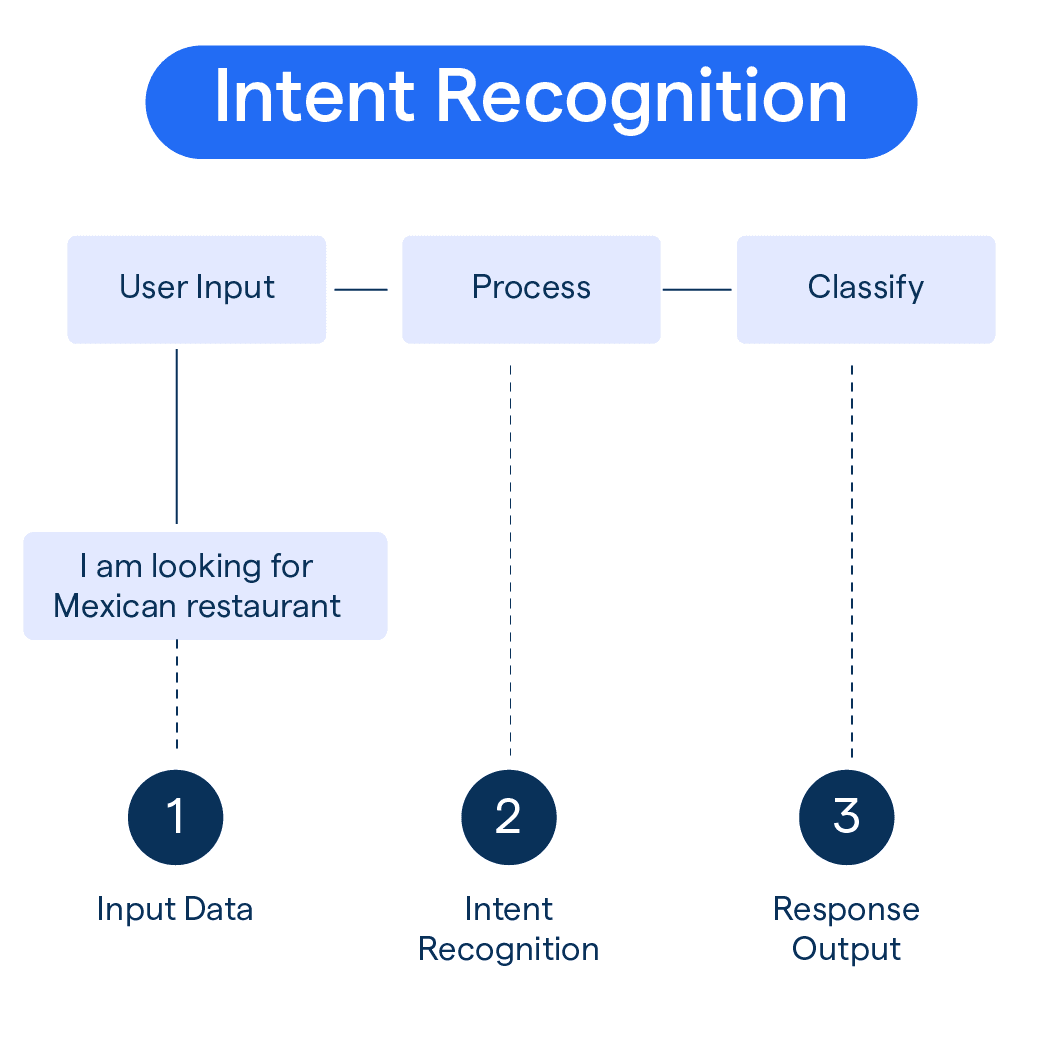
Intent recognition works by reading a user message, mapping it to a known intent, and extracting key details. The message may be typed or spoken. The system checks what the user likely wants and chooses the best-matching action.
For example, “Where is my order?” means tracking. “Has my parcel shipped?” can mean the same thing. Both can map to one order-status intent.
Good intent identification helps bots avoid guessing. It also helps them ask better follow-up questions. This makes the response more useful.
Utterances, Intents, and Entities
Three terms matter in intent recognition: utterances, intents, and entities. An utterance is the user’s exact message. An intent is the goal behind it.
An entity is a detail inside the message. For example, in “track order 4821,” the intent is to track the order. The entity is the order number.
Intent recognition finds the goal. Entity extraction finds the supporting details. Together, they help the bot complete tasks.
For related entity extraction, learn about named entity recognition.
Rule-Based vs ML/LLM-Based Intent Detection
Older bots used rule-based intent detection. They matched fixed keywords and patterns. This worked only for predictable phrases.
Modern systems use machine learning and LLMs. They learn from many example messages. This helps them understand varied wording.
A rule-based bot may miss “cancel my booking” if it expects only “cancel appointment.” ML-based systems can handle both more easily. This makes modern chatbot intent recognition more flexible.
Intent Recognition vs Intent Classification
Intent recognition and intent classification are closely related. Intent recognition is the process of determining what the user wants. Intent classification is one step inside it.
Intent classification assigns a message to a known category. Examples include “book_demo” or “reset_password.” That label tells the chatbot what to do next.
So classification supports recognition. It gives the system a clear action path. This is why intent classification belongs inside the broader topic of intent recognition.
How Classification Fits In
When a message arrives, the model scores it against known intents. It compares the message with available intent categories. Then it selects the most likely match.
If confidence is high, the bot responds. If confidence is low, it should ask a clarifying question. This prevents the bot from guessing badly.
Accurate classification needs clear intent groups. It also needs strong training examples.
And, for setup context, read up on chatbot training.
Intent Recognition in Chatbots and AI Assistants
Intent recognition in chatbots is the first real step of understanding. The bot reads the user’s message and decides what the user needs. Once intent is known, the bot can act.
For example, a pricing question needs pricing details. A refund request may need a support flow. A complaint may need human routing.
This is what makes intent in AI practical. The system does not just read words. It understands the purpose behind them.
BotPenguin’s AI chatbot helps businesses automate such conversations. Teams can build bots for support and lead handling. They can also route complex cases to humans.
Learn how BotPenguin’s AI chatbot understands user intent.
How Bots Route a Message Once Intent Is Known
Routing becomes simpler after intent recognition. Each intent maps to the next step. That step may be a reply, flow, or destination.
A “reset password” intent can start self-service. A “speak to agent” intent can route to live chat. A “book demo” intent can open the scheduling page.
This avoids rigid menus. Users can explain needs in their own words. The bot sends them to the right place.
Why Intent Recognition Matters
Intent recognition makes chatbots more useful. It helps them understand meaning, not keywords. That changes the full conversation experience.
When it works well, users get relevant answers. They do not need exact wording. They reach the right flow faster.
When it fails, conversations break down. The bot misunderstands the request. Users repeat themselves or leave.
For businesses, accuracy affects the quality of automation. It shapes support resolution and lead routing. It also reduces unnecessary human handoffs.
Intent recognition also supports better AI design. It works with semantic analysis and entities. Together, they turn raw messages into action.
For meaning-focused analysis, understand semantic analysis.
Intent recognition is the understanding layer behind useful chatbots. It helps AI move from message to action. That makes it central to conversational automation.
Build an AI chatbot that understands your customers.
Frequently Asked Questions (FAQs)
What is intent recognition?
Intent recognition is the process by which AI systems work out what a user wants from their words. In chatbots, it identifies the goal behind a message. It identifies goals such as booking, asking a price, or getting support, so the bot can respond or route correctly.
How does intent recognition work?
It analyses a user's message (an utterance), maps it to a defined intent, and extracts key details (entities). Modern systems use machine learning or LLMs trained on examples. They classify intent even when phrased in many different ways.
What is the difference between intent recognition and intent classification?
Intent recognition is the task of determining what a user wants. Intent classification is the step of assigning a message to one of a set of predefined intent categories. This is a core part of how recognition is performed.
How do chatbots use intent recognition?
Chatbots use intent recognition to understand each message and decide what to do: answer, ask a follow-up, trigger a flow, or route to a human. It is what lets a bot respond to meaning rather than exact keywords.
What is an intent in AI?
An intent is a defined goal or purpose behind a user's message. For example, ‘check order status’ or ‘reset password’. AI groups many different phrasings under the same intent, so it can respond consistently.
Is intent recognition part of NLP?
Yes. Intent recognition is a core task within natural language processing (NLP). NLP gives machines the ability to understand language; intent recognition applies that to identify what the user actually wants.